-
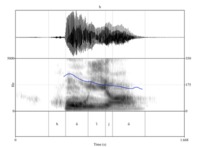 CLDSuN
-
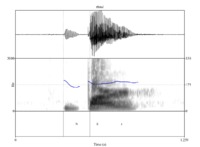 CLDSr
This token of r [ɹ] is in word-final position of a word spoken in isolation.
Note also the voicing in the initial b [b]; unaspirated stops in Dene Sųłine tend to be voiced.
-
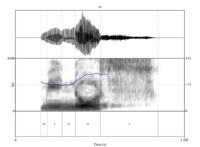 CLDSn
-
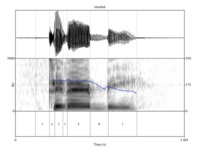 CLDSiN
-
 CLDSiH
-
 CLDSeH
-
 CLDSaN
-
 CLDSz
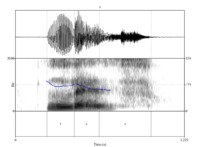
This is the voiced version of s [s]. It has semi-phonemic status; z [z] does not appear in word-initial position. In this example, it is only partially voiced.
-
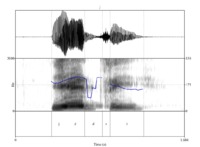 CLDSy
This token also contains the voiced alveolar affricate dz [dz] in stem-initial position; note the clear intervocalic voicing.
-
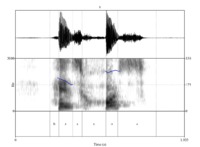 CLDSx
The voiceless velar fricative x [x] in stem-initial position, following s [s].
-
 CLDSuH
-
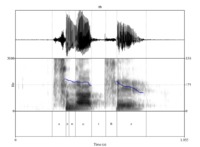 CLDStth
The aspirated interdental affricate tth [tθ] in stem-initial position between two vowels. This is a voiceless sound. The contrast between ddh [dð] and tth [tθ] is one of voicing in Dene Sųłiné.
-
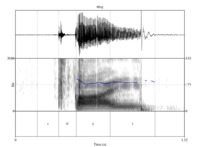 CLDStth-
The ejective tth’ [tθ’] is a dental ejective affricate. This sound has the characteristic profile of a Dene ejective; the release of the stop is about halfway through the sound, visible in the waveform. Speakers sometimes describe this sound as having a click quality.
-
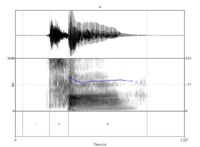 CLDSts
The voiceless alveolar affricate ts [tsʰ] in word-initial position. Contrast this with the unaspirated dz [dz], noting the differences in their release periods.
-
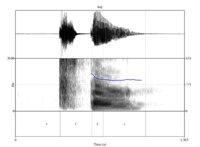 CLDSts-
An example of the alveolar ejective ts’ [ts’] in word-initial position. Note the long break from the release of the oral closure to the onset of the vowel. The fricative portion of the affricate sound ends well before the onset of the vowel in a typical Dene ejective. This sound is unvoiced.
-
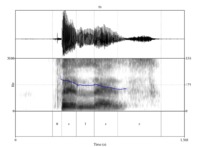 CLDSth
An example of the voiceless interdental fricative th [θ] in word-initial position.
-
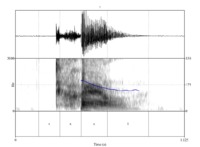 CLDSt
A t [tx] in initial position. Although this sound is written as t in the orthography, it is actually an affricate [tx], with a strong and clear fricated release. In this example, the release of the affricate is coarticulated with the vowel, giving it a slightly palatalized sound. This sound is voiceless.
-
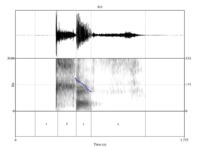 CLDStl
A voiceless aspirated alveolar affricate tł [tɬʰ] in word-initial position. Contrast the release period of this sound with that of dl [dl].
-
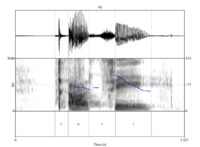 CLDSt-
The alveolar ejective t’ [t’] in word-initial position. The release of the stop occurs before the onset of the vowel, leaving a space between the release and the vowel onset that is characteristic of Dene ejectives.
-
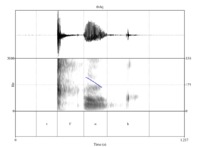 CLDStl-
An example of the alveolar lateral ejective affricate tł’ [tɬ’] in word-initial position. Like all Dene ejectives, this sound is voiceless.
-
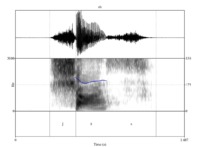 CLDSsh
The voiceless post-alveolar fricative sh [ʃ] in word-initial position. Contrast the strength of the frication in this sound with that of the s [s] at the end of the word.
-
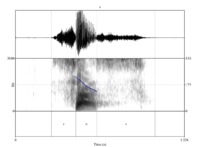 CLDSs
The voiceless alveolar fricative s [s] in both word-initial and word-final positions; in either position, this sound is voiceless.
-
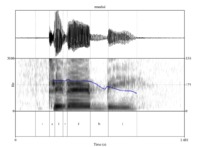 CLDSr
In this token, the r [ɹ] is intervocalic and quite short; compare this token with the following example.
-
 CLDSo
-
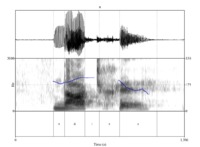 CLDSn
This word also exemplifies t [tx] in stem-initial position.
-
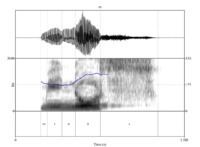 CLDSm
-
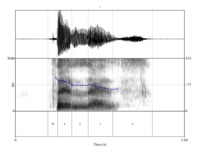 CLDSl
This is the voiced reflex of the lateral fricative. Although the laterals in general are understood to be fricatives, many of the voiced lateral fricatives are realized as approximants, as seen in this token.
-
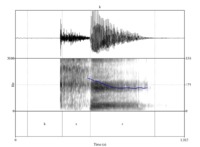 CLDSk
An example of the k [kx] sound in word-initial position. The sound is called an aspirated stop, but is more accurately described as an affricate with a strong velar fricative release. The fricative release is a clear and audible property of the sound.
-
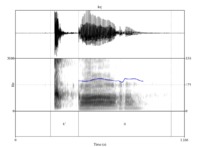 CLDSk-
A characteristic example of the velar ejective k’ [k’] in word-initial position, with a strong release that ends well before the onset of the vowel.
-
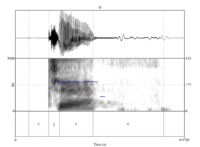 CLDSj
This token j [dʒ] is voiceless in this word, so it is actually a voiceless unaspirated affricate. It differs from ch [tʃʰ] in the length of the frication period. In this token, the frication period is short, and the vowel begins right at the end of the fricative portion of the sound. Compare this with dz [dz].
-
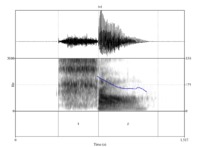 CLDSlh
A voiceless lateral fricative ł [ɬ] in word-initial position. This sound is very clearly voiceless, and articulated with strong frication.
-
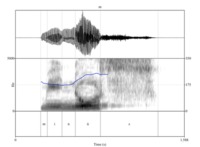 CLDSi
-
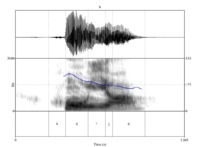 CLDSh
The glottal fricative h [h] in word-initial position. This sound is voiceless.
-
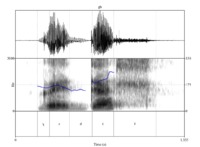 CLDSgh
The voiced velar fricative gh [ɣ] in word initial position. Note that the d [d] phomene is fully voiced in the stem-initial position in this word.
-
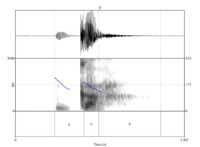 CLDSg
The g [g] phoneme in word-initial position. This is a voiced sound, although it is less voiced than d [d] or b [b].
-
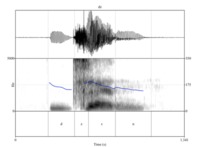 CLDSe
-
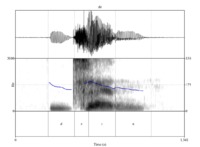 CLDSdz
This token of dz [dz] is voiced; the closure period is strongly voiced but the release period is voiceless, as is characteristic for these sounds.
-
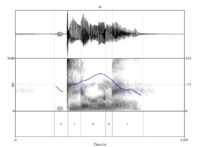 CLDSdl
An example of the fully voiced lateral affricate dl [dl] in word-initial position. The lateral release has qualities of an approximant; the release has a formant structure.
-
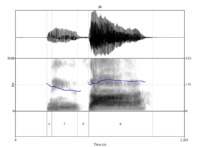 CLDSdh
The interdental fricative dh [ð] between two vowels. This sound is only slightly voiced.
-
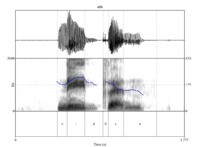 CLDSddh
An example of ddh [dð] in stem-initial position, between two vowels. The sound in this example is voiced.
-
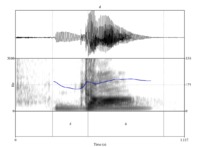 CLDSd
The phoneme d [d] in word-initial position. This a strongly voiced stop; voicing is visible all the way through the stop closure. Contrast the voicing of this stop with the bilabial b [b] example; the token here is more strongly voiced.
-
 CLDSch
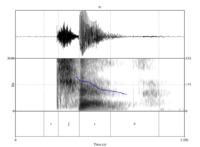
An example of the affricate ch [tʃʰ] in word-initial position. The frication period of this sound is voiceless, and the fricative ends with a small period of aspiration right before the onset of the vowel. Note the difference between this sound and the j [dʒ] phoneme in length and type of release period.
-
 CLDSch-
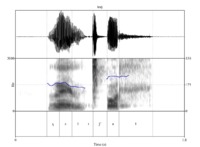
An example of ejective affricate ch’ [tʃ’] in stem-initial position. The characteristic ejective profile is present and can also be seen in the t’ [t’], k’ [k’], ts’ [ts’] and tł’ [tɬ’] sounds.
-
 CLDSb
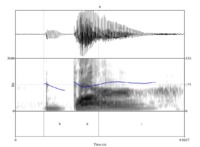
The phoneme b [b] in word-initial position; the voicing bar is visible in the waveform.
-
 CLDSaH
-
 CLDSa
